
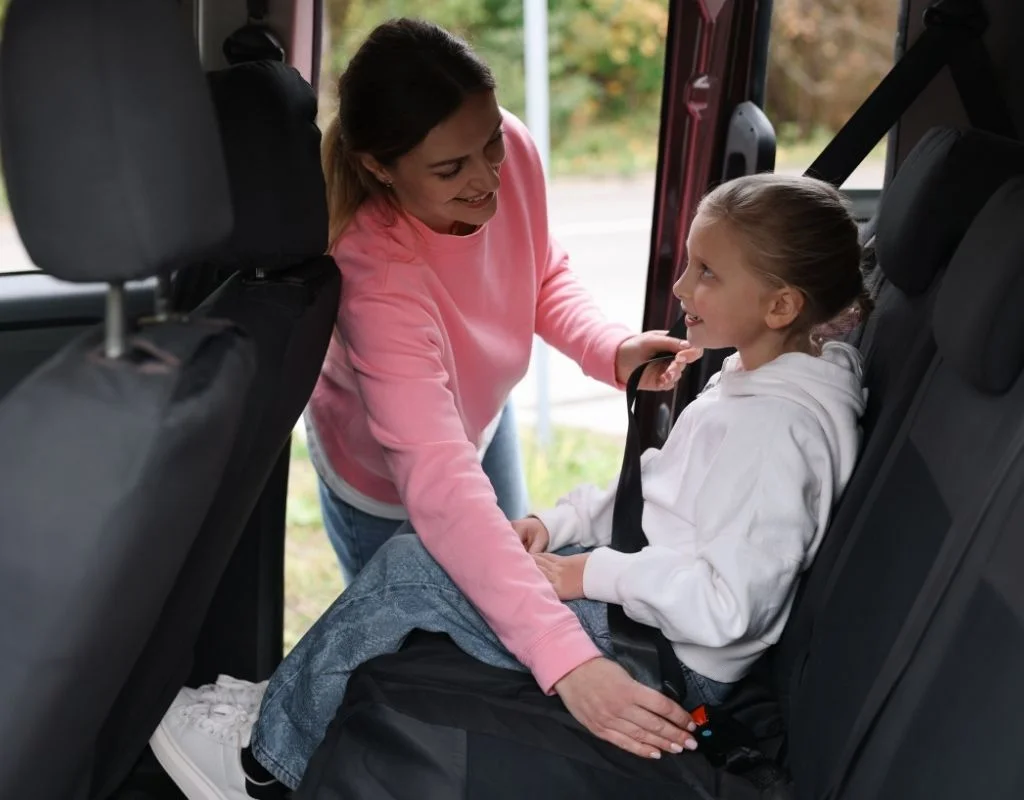
A safe car lift service is authorised for its route, uses an identifiable driver and vehicle, and provides a working seat belt for every passenger. Before boarding, verify the booking, number plate and driver, then share your route and expected arrival time with someone you trust.
Yes, a car lift in the UAE can be safe and legal when the operator holds the commercial permits required for passenger transport in that emirate, such as Dubai RTA approvals or Abu Dhabi Mobility permits for regulated services, and the driver and vehicle are authorised for the route.
Before getting in, compare the arriving car and driver with the details sent when you booked.
A car lift can suit women, students and night commuters when the operator is authorised, and the trip details are clear. Available safety features vary by company, so confirm them before paying.
For added peace of mind, women can ask the provider if they offer female-only rides or female drivers for their specific route and schedule. Confirm the assigned driver before each pickup, and ask what background checks the company carries out.
When booking a school car lift for your child, ask the company for a live vehicle tracking link, or have your child share their live location from their phone during the ride. Agree on who will meet the child, what happens if the driver is late, and how arrival will be confirmed. If the service is presented as school transport, ask whether it has the relevant approval.
At night, wait at a well-lit, staffed pickup point and keep your phone charged. Share your live WhatsApp location, the plate and your expected arrival with someone you trust. Avoid unexplained detours or extra passengers. If you feel uneasy, ask the driver to stop at a safe public place.
Drivers commonly use E11 or E311 for trips between Dubai and Abu Dhabi. For a safe journey, always ensure the operator is authorised for the route, the driver is alert, and everyone is buckled up. Speed limits can vary along each road, so follow the current signs rather than a remembered limit.
The better option depends on your route, schedule and budget. A licensed car lift can suit a regular commute. RTA buses follow set routes, while taxis offer direct trips.
Metric | Car Lift | RTA Buses in Dubai | Taxis |
Door to Door Service | Agreed pickup and drop off; may use shared stops | No; fixed stops and routes | Usually direct, where access allows |
Fixed Cost | Often a monthly or route fee; check extra charges | Published fare for the journey | Metered or app based; varies by trip |
Crowding | May be shared; confirm passenger capacity | Shared; crowding varies by route and time | Usually your team, unless you book a shared ride |
Safety Regulation | Depends on the operator; verify permits for the service and route | Public transport regulated by the relevant authority | Licensed service regulated by the local authority |
If you ever feel you are in immediate danger during a ride, ask the driver to pull over at a safe, public place. Never attempt to leave a moving vehicle. As soon as it is safe to do so, call the police and share your live location.
Keep these essential UAE contact numbers handy:
(For non-emergencies in other emirates, check with your local police department’s website.)
Warning on Insurance Liability: While the Central Bank of the UAE (CBUAE) rulebook allows injured passengers to claim against a vehicle’s third-party liability cover, this only applies if the vehicle is operating legally. If you are injured in an unlicensed private car lift, the insurer will likely void the policy due to illegal commercial use, leaving you entirely responsible for your own medical bills. Always ask for the insurer’s details before booking.
Request the company’s trade licence and activity, vehicle and driver permit numbers. Verify them through official Dubai RTA or Abu Dhabi Mobility channels. In Abu Dhabi, Asateel handles permits for specified company, vehicle and driver activities. For a trip between emirates, ask for route authorisation too.
Generally, penalties target the operator or driver providing paid transport without required permission, rather than passengers simply taking a ride. Rules can vary by emirate and circumstance. If stopped, cooperate with officials and follow their instructions.
Not necessarily. A monthly package does not prove that separate personal accident benefits are included. Ask for the insurer and policy details, whether passenger injury is covered for the stated commercial use, what exclusions apply, and how to start a claim after an accident.
Get written confirmation of the operator’s legal name and permit, driver name and contact, vehicle make and plate, route, pickup and drop-off times, fare and extra charges, seat capacity, cancellation terms, and a contact for delays or safety concerns. For regular service, ask what happens if the driver or vehicle changes.